FACEBOOK

19 Haziran 2015 Cuma

Why the best-educated women are opting for more children

American families

Having it all, and then some


IN 2007 Cathy McMorris Rodgers, a 37-year-old Republican congresswoman from Washington state, became the first woman in over a decade to give birth in office. In 2010 she had a second child, and in 2013 a third. That made her the first, and so far only, woman to give birth more than once while in Congress. Yet although her experience is rare among legislators, new data on births show that she is, in fact, rather typical of one category of American women. While the overall birth rate keeps declining, well-educated women seem to be having more children, not fewer.
 
A new report from the Pew Research Centre, based on an analysis of census data, looks at women who have reached their mid-40s (when the vast majority of women stop having children) over the past two decades. It finds that the proportion of all women who reach that age without ever having a child has fallen, but the decline is sharpest among the best-educated women. In 1994, 35% of women with a doctoral degree aged 40 to 44 were childless; by last year, this had fallen to 20% (see chart). Their families are bigger, too. In 1994, half of women with a master’s degree had had two more or more children. By last year, the figure was 60%. It still holds true that the better-educated a woman is, the less likely she is to have a child. But Pew’s data show that the gap has narrowed.

At the same time, data from the Centres for Disease Control, which monitors births, show that the average new mother has become substantially older. Since the start of recession in 2007, America’s general fertility rate has declined to its lowest level in recorded history. But all that drop is accounted for by teenagers and women in their 20s. Birth rates for women in their 30s have increased markedly. Because older, better-educated women are more likely to be married, this has also stabilised the proportion of children born in wedlock. In 2009 41% of newborn babies had unmarried parents; in 2013, 40.6% did.
 
Why might older, better-educated women be having more children? Partly because access to education has widened—and so women who were always going to have children are spending more time in college. Another reason is that fertility treatment has improved dramatically, and access to that, too, has widened. Older women who, in the past, wanted children but were unable to have them are now able to.
 
But according to Philip Cohen, a demographer at the University of Maryland, this does not explain the entire leap. Rather, social changes in the nature of marriage seem to be driving the change. Whereas marriage was once near-universal and unequal, in recent decades it has become a deliberate option and more equal. Well-educated women have been able to form strong relationships with similarly brainy men, in which both parents earn and both do some child care. Getting an education and having a career are no longer always a barrier to having children; sometimes, they make it easier.
In 1965, mothers spent seven times as long caring for children as fathers did. By 2012 they were spending “only” twice as much time elbow-deep in formula and Pampers. According to Stephanie Coontz, of Evergreen State College in Washington, how much time fathers spend helping to bring up children is the main determinant of whether mothers will have a second child. And as more career-minded women have had children, they have become powerful enough to demand time off from their employers. Although America has no national system of paid maternity leave, many professional firms now offer it—Ernst & Young, an accountancy firm, offers 39 weeks to its employees, for example.
 
Poorer women, however, have had little luck of that sort. As the economic prospects of blue-collar men have faded, women find the menfolk are pitching in not more, but less, suggests Ms Coontz: “And if I’m a lower-income woman…do I want to hitch myself to a guy who may become just another mouth to feed?” Their employers, meanwhile, are less likely to give them time off. When recession came in 2007, it was these women who delayed having children. Giving birth is not yet a luxury good—but it may be getting that way.
 
blue-collar işçilerle ilgili, işçi sınıfına ait
brainy zeki, akıllı
census sayım, nüfus sayımı
decline inişe geçmek, gerilemek
deliberate kasti, ölçüp biçmek
fade solmak, karartmak
legislator yasamacı, kanun koyucu
menfolk erkekler
pitch yalpalamak, kur yapmak
prospect araştırmak, incelemek
recession girinti, düşüş, gerileme
stabilise dengede tutmak
wedlock nikah, evlilik bağı

18 Haziran 2015 Perşembe

Is It True That a T-Rex Couldn’t See You If You Didn’t Move?

Derek asks: Is it true that a T-Rex couldn’t see you if you didn’t move? If so, how do scientists know this?
 
t-rex


In the immensely popular (despite the sins) movie Jurassic Park, there’s the famous scene where the giant T-Rex is attacking a jeep during a thunder storm. As it attacks, Dr. Alan Grant, a self-respecting paleontologist, yells, “Don’t move! He can’t see you, if you don’t move.” Here’s the thing – that’s wrong.  (If that comes as a blow, you’re definitely not going to want to learn the shocking truth about Velociraptors.) The Tyrannous Rex not only could see just fine, whether the object was moving or non-moving (which helps one not run into things), there’s also quite a bit of evidence that the T-Rex’s sight was extremely good, very possibly better than modern-day hawks and eagles.

This non-moving “fact” from the hit 1993 movie inspired a good deal of research into the subject. Professor Kent Stevens at the University of Oregon began the project DinoMorph in 1993. His goal was to develop “a means to create scientifically useful yet simplified digital models of dinosaur skeletons.” Using digital technology, he wanted to recreate tangible visualizations of extinct animals, including the T-Rex. After speaking at a conference in Toronto in June 1993 (the movie was released in the US  on June 11, 1993), he paid a visit to the Royal Ontario Museum where he met with North America’s leading paleoartist, Garfield Minott. He was working on a life-size “reconstruction” of a Tyrannosaurus Rex and provided Stevens with life-like head sculptures of seven different theropods (bipedal and primarily carnivorous dinosaurs), including a T-Rex and Velociraptor.

Using these models, a laser pointer, a glass plate, and taxidermic glass eyeballs, Stevens performed experiments to determine the visual field, depth perception, and binocular range (the area that can be viewed at the same time by both eyes) of these dinosaurs. He published the results in 2006. Performing a test called “inverse perimetry,” Stevens evaluated how well a T-Rex would be able to see objects at various elevations and shapes. The wider an animal’s binocular range is, “the better its depth perception and capacity to distinguish objects–even those that are motionless or camouflaged.”
Stevens determined that a T-Rex’s binocular range was 55 degrees, which is wider than even hawks. Stevens continued the research with other theropod dinosaurs and determined that most theropods had binocular ranges at least similar to modern raptorial birds (aka “birds of prey”).

Another recent discovery also confirmed that vision was an important sense for the T-Rex, as scientists determined that the T-Rex’s snout over time gradually grew longer, narrower, cheek bones dipped more inward, and their eyeballs grew bigger.

While structurally the T-Rex’s head and eyes seem primed for great vision, the question remained- how good were their eyes really? For that, Stevens took the known optics of distant relatives of the T-Rex, including the eagle, chicken, and crocodile, and plugged them into the larger T-Rex eyeball. He was trying to determine visual acuity (clearness of vision) and the greatest distance an object can be seen that still remained distinct. According to his findings, while admitting that these were best-case scenario determinations, the T-Rex may well have had visual clarity up to 13 times better than a modern human. For reference, an eagle has about 3.6 times the visual clarity of a person. Additionally, it was determined that a T-Rex’s vision allowed an object to remain relatively clear up to six kilometers away. For humans, it’s only about 1.6 kilometers for the same clarity. As Stevens put it, “With the size of its eyeballs, (the T-Rex) couldn’t help but have excellent vision.”

Of course, in the movie (and to a greater and more detailed extent in the book), it is stated that in order to bring these dinosaurs back to life, the scientists needed more DNA to fill the “gaps”. In the book, they decided to splice dino DNA with bird, lizard, and frog DNA. In the movie, they only use frog DNA to hammer home the plot device that certain species of frogs can change gender when there is significantly less of one gender in the wild. So given this, it may be that the dinosaurs in the movie are more frog than actual historic dinosaurs. So, if that’s the case, while a bit of a stretch, the question that can be asked is, “Was the statement made by Dr. Grant in the movie actually more about a frog’s vision than a T-Rex’s?” Digging a tad deeper, this quote from the movie by Dr. Grant gives us a clue to what species of frog they may have used:
They mutated the dinosaur genetic code and blended it with that of a frog’s. Now, some West African frogs have been known to spontaneously change sex from male to female in a single sex environment.
The most common West African frog that has a tendency to change gender is the African reed frog. These frogs see quite on par with other species of frogs with their horizontal pupils, though they cannot see in the red spectrum. Yes, it is documented that frogs have a hard time seeing prey that doesn’t move, but not significantly so, such that they’d be blind to them. Plus, humans (and really, all other prey) do move even when they think they are standing still- breathing, trembling, involuntary jerks, this is all movement. Additionally, as Kent Stevens said in response to this moving myth question, “If you’re sweating in fear one inch from the nostrils of the T. Rex, it would figure out you were there anyway.”

Besides great vision, the T-Rex also had a great sense of smell (and had good hearing). In fact, their large olfactory bulbs and nerves relative to their brain size indicates they may have had a sense of smell about equivalent to modern vultures, which are able to smell dead things from as far away as a couple kilometers. (See: Why Don’t Vultures Get Sick When They Eat Dead Things) So whether scavenging or hunting, the T-Rex was good at finding things to eat.  That said, there is some debate as to just how fast they were, with most scientists today thinking they had only a max speed of about 17-25 mph. That would have made the jeep chasing scene quite a bit less dramatic.

REFERENCE

http://www.todayifoundout.com/index.php/2014/05/true-t-rex-couldnt-see-didnt-move/


VOCABULARY

acuity zeka, duyarlılık
extinct bitmiş, soyu tükenmiş
figure out çözmek, bulmak, anlamak
hammer ağır yenilgiye uğratmak
immensely son derece
plug into prize takmak
raptorial yırtıcı
scavenge çöple beslemek
tangible somut, maddi
tremble  titremek, ürpermek
vulture akbaba
yell bağırmak, çığlık atmak


17 Haziran 2015 Çarşamba

8 Haziran 2015 Pazartesi

High Heels Were Popular Among Men Before Women


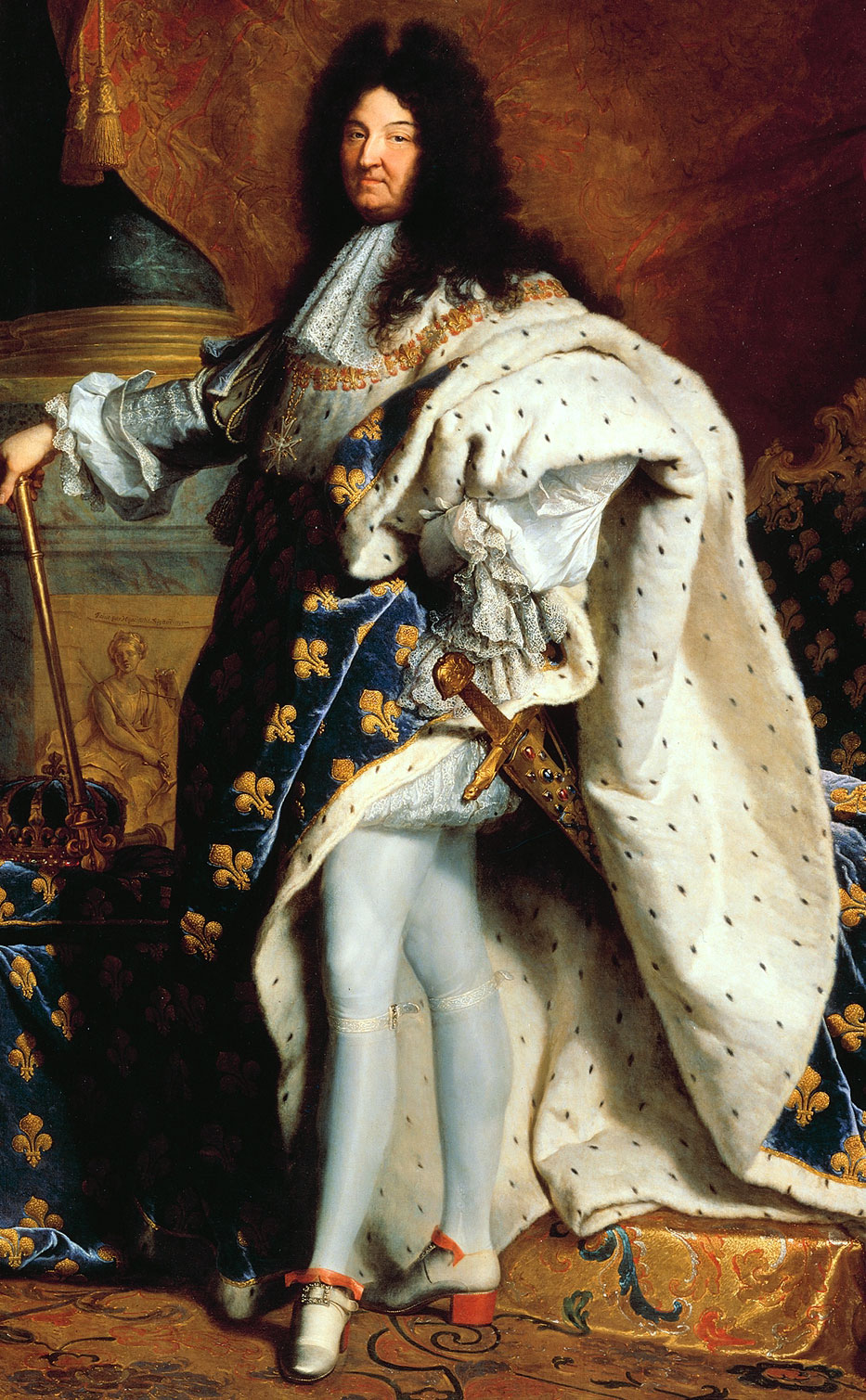
King Louis looking fabulous with his long hair, intricatley patterned dress, tights, and high heels.


King Louis looking fabulous with his long hair, intricately patterned dress, tights, and high heels.
 
 
Today I found out men wore high heel shoes long before women.
 
The first high heel wearers are believed to have been Persian horseback warriors sometime around the ninth century. The extended heel was reportedly developed specifically for riding, to keep the rider’s foot from slipping out of the stirrups. It also helped to hold the rider steady when standing up in the stirrups and shooting arrows.
 
A group of Persian diplomats visited Europe in 1599 to recruit allies to help Persia defeat the Ottoman Empire. A craze for Persian culture developed as a result and Persian-style high heeled shoes were adopted enthusiastically by Western European aristocrats.
 
The shoes became a status symbol and the heels were extended to make the men look even taller. (This is thought by many etymologists to be where the term “well heeled”, meaning “wealthy” originally came from.)
 
Just as the 1980s had notorious shoe collector Imelda Marcos, the 1600s had a rabid shoe collector and trend setter in Louis XIV of France. While he was a powerful leader, his height left something to be desired at five feet, four inches tall (1.62 m), which was slightly below average in his day. (The average height for men in France at the time, in modern international units, was 5 ft. 5 inches or 1.65 m.  Note: Contrary to popular belief, Napoleon was not short; he was two inches taller than the average in his day.)
 
A king being slightly shorter than average wasn’t ideal for his ego, so Louis took measures to make himself look taller, sporting four inch heels, often decorated with elaborate battle scenes. Eventually, he switched to having red heels on all his shoes and decreed that only the upper echelons of society could have matching red heels. It became a simple matter of looking at the color of a man’s heels to see if he was in the king’s inner circle.
 
Not to be outdone, women of the 1600s started wearing heels as a way of showing their equality. Elizabeth Semmelhack, curator of the Bata Shoe Museum in Toronto and author of Heights of Fashion, a History of the Elevated Shoe, says the rage of that period in parts of Europe was for women to dress and act like a man. (It should be noted, though, that at the time men’s outfits by today’s standards were extremely effeminate, a-la King Louis XIV’s photo above.)
You had women cutting their hair, adding epaulettes to their outfits. They would smoke pipes, they would wear hats that were very masculine. And this is why women adopted the heel — it was in an effort to masculinise their outfits.
As usually happens, high fashion is adapted into more affordable versions and filters down to the less fortunate.  The lower classes started to wear high heels. The elite responded by making their heels increasingly higher to maintain the distinction of being upper class- the higher the heel, the more expensive the shoe typically was. They also began to differentiate heels into two kinds- fat heels for men and skinny for women.
 
Eventually, men got away from the heel almost completely to show their distinction from women. Since the late 18th century, men’s shoes have had primarily low heels, except for cowboy boots and some shoes worn by rock stars, who occasionally have a propensity to wear effeminate garb similar to before the “Great Male Renunciation”, when men switched from wearing jewelry and elaborate outfits with highly decorated cloth to drab, darker colored simple clothing. Basically, when Western men on the whole stopped trying to beautify themselves, starting at the tail end of the 18th century.
 
For a time, women also drifted away from the heel as it truly wasn’t practical, particularly on old muddy or cobblestone style streets where heels were nearly impossible to walk in. They weren’t gone long, though. The heel came back into fashion in the mid-19th century with the advent of photography.  Why? As seems to happen often when new technologies are introduced, pornographers are always among the first to take advantage and they were among the first to embrace photography. This pertains to high heels in that they often dressed models for risqué post cards and other photographs in nothing but a “modern” (for that time) version of the high heel.
 
Since then, high heels have come in and out of fashion repeatedly, except for in the porn trade, where they’re seemingly a constant. Lower heels were preferred during the late 1960s and early 70s. In the 1980s and 90s, high heels made a popular comeback. Various styles of heels have taken their turn on the runways as well, such as the block heel of the 70s, the mule and the famous stiletto that’s been popular in the 50s, 80s, and today.
 
Bonus Facts:
  • King Louis XIV may have dressed fabulously but one Russian ambassador once stated “His Majesty [Louis XIV] stunk like a wild animal.”  Like so many of his time in that part of Europe, Louis almost never bathed.  In Louis’ case, his physicians advised him to abstain from bathing to maintain proper health.  Louis himself also said he found the act of bathing disturbing.  Rumor has it, in his adult life, he supposedly only bathed twice. More here: Why Bathing was Uncommon in Medieval Europe
 
  • Queen Isabel I of Spain also once claimed she only bathed twice in her whole life, when she was born and when she was married.
 
  • Shoes that raise both the heel and the toes equal amounts are not considered to be high heels, but platform shoes.
 
  • A 2008 study suggests that wearing high heels may improve the muscle tone of a woman’s pelvic floor, thereby having a potential positive effect on female stress urinary incontinence.
 
  • Other studies show that long term wearing of high heels can cause sciatica, ingrown toenails, arthritis in the knees, lower back pain and plantar fasciitis...

REFERENCE


VOCABULARY

 
Abstain from çekinmek, kaçınmak
Affordable bütçeye uygun, ekonomik
Battle savaş, muharebe
Cobblestone arnavut kaldırımı (taşı)
Craze çatlamak, delirmek, çıldırtmak
Decree hüküm vermek, emretmek
Drab donuk renk, sıkıntılı, arkadaşsız
Drift away sürüklenmek
Echelon kademe, basamak, diziliş
Effeminate erkekçe olmayan tavır, kadınsı
Elaborate özenle hazırlanmış, özenli
Enthusiastically hevesle, şevkle
Epaulette apolet, omuzluk
Eventually nihayetinde, sonuçta, er geç
Extended genişletilmiş, kapsamlı, büyük
Fabulous harika, inanılmaz, şahane
Filter down azaltmak
Garb elbise, giiydirmek
Intricately karışık olarak, girift
Masculinise erkeksileştirmek
Notorious adı çıkmış, kötü şöhretli
Outdone üstün, yenmek, taş çıkarmak
Outfit donanım, örgüt, grup
Propensity dürtü, doğal istek
Rabid fanatik, müfrit, azgın
Renunciation feragat, vazgeçme
Sciatica siyatik ağrısı
Trend setter moda başlatıcı
Skinny dar
Slip out ağzından kaçırmak, kurtulmak
Stirrup dayak, germe, üzengi
Switch saptırmak, makas
Warrior cengaver, savaşçı
 

7 Haziran 2015 Pazar

Reading in Dim Lighting Will Not Damage Your Eyes


Myth: Reading in a dimly lit area will damage your eyesight.

In fact, the only “damage” reading in a dimly lit setting will do, in comparison to reading in an ample lighted setting, is to cause extra eyestrain, which will go away simply by resting your eyes.  This shouldn’t be too much of a surprise given the fact that for centuries people have been reading by candlelight without rampant reports of rapidly reduced eyesight.  In fact, the opposite has happened with rates of things like myopia, usually what is most cited as being what reading in dim light contributes to, being on the rise despite all our bright light sources.  Nonetheless, perhaps because parents the world over are trying to get their kids to go to bed, rather than to sneakily try to read by a nightlight or the like, this myth has been widely perpetuated.

It even made it on the list of “Seven Medical Myths That Doctors are Most Likely to Believe”, a list put together by the British Medical Journal, which is in turn owned by the British Medical Association (for the other six medical myths that even doctors sometimes perpetuate, see the Bonus Facts below).  In addition to doctors, 56.3% of teachers surveyed by BioMed Central say that in order to maintain good eye health, people should avoid reading in dim light, despite the fact that to date no scientific study has been able to conclusively show that reading in dim light hurts your eyesight (long term) more than reading in an adequately lit area.

Now it should be noted that people who read a lot or otherwise focus on things close up for long periods of time, such as people who work on computers all day or do a lot of sewing or the like, do have a higher tendency to develop myopia (nearsightedness), but dim lighting doesn’t appear to make this tendency worse, simply that excessive reading seems to contribute to eventually developing nearsightedness.

Why exactly this is the case isn’t yet fully understood, but the correlation is strong enough between groups of people who do a lot of “close-eye work” and their propensity to develop myopia at a drastically higher rate than the average, that most optometrists are prepared to say that “close-eye work” is for some a major contributing factor to developing myopia.  Although, of course, until someone figures out exactly why and proves it in a scientific manner, they can’t say for sure as correlation does not imply causation.  The leading theory, which seems plausible enough, is that the near constant straining of muscles focusing the eye, stretching the eyeball a bit, over the years gradually causes a permanent lengthening of the eyeball, thus the person developing myopia as they age.

Now, reading in dim light does seem to increase eyestrain, so some theorize that this exacerbates the above problem, assuming that theory is correct, but the consensus among optometrists is that if this is what is happening and eyestrain is indeed significantly greater in low-light, it’s very unlikely that the difference is going to be so great that it produces a noticeable acceleration of the development of myopia over reading in a well lit area.

The reason reading in low light is thought to increase eyestrain is because your eyes have to work a lot harder to focus on the words. Your iris is simultaneously trying to open your pupil as wide as possible to let in more light, while your eye is also trying to focus that small amount of light hitting the words onto your retina just right so that you can distinguish between the words and the page itself. According to optometry professor Howard Howland of Cornell University, this is accomplished by your muscles lengthening your eye even more than normal when reading to bring everything into focus.

Whether reading in low-light or ample light for lengthy time frames, the resulting eyestrain is not serious and one simply needs to rest the eyes on occasion. You can do so by periodically taking a break from focusing on something close up, and instead looking at something far away. Specifically as a general rule, optometrists tend to recommend taking a break from focusing your eyes on close up things for a minute or two every 15-30 minutes.  Also, closing your eyes for a minute helps because, while reading, you typically blink about 1/4 the amount you would normally do, so your eyes can get a bit dry.  Trying to train yourself to blink regularly while concentrating isn’t usually feasible, so the eye-closing method tends to work better for most people.

REFERENCE

http://www.todayifoundout.com/index.php/2012/05/reading-in-dim-lighting-will-not-damage-your-eyes/

VOCABULARY

Acceleration ivme, hızlandırma
Ample bol, yeterli, kafi
Blink göz kırpmak
Conclusively kesin olarak
Correlation korelasyon, karşılıklı ilişki
Dimly lit loş, yarı aydınlık
Drastically sert bir şekilde, şiddetle
Exacerbate kızdırmak, kötü bir durumu artırmak
Eyestrain göz yorgunluğu
Feasible uygulanabilir, makul
Go away çekip gitmek, ayrılmak
Myth efsane, masal, mit
Optometrist göz doktoru
Permanent daimi, kalıcı
Perpetuate devam ettirmek, ebedileştirmek
Plausible makul, olası, akla yatkın
Propensity arzu, eğilim, istek
Simultaneously eşzamanlı olarak, aynı anda
Sneakily sinsice, korkakça, gizlice
Strain gerginlik, gerilmek, kasılmak
Stretch uzamak, uzatmak, germek
Tendency eğilim, meyletme, temayül